
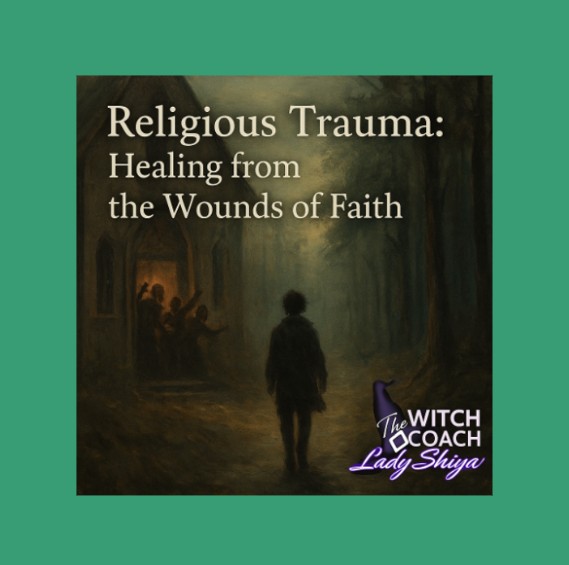
There’s a kind of wound that cuts deeper than most — the one left by the very place you were told to find peace.
For some of us, that place was a church pew. For others, it was a sanctuary lined with guilt, dressed up as holiness.
I was raised in a world where God’s love came with conditions, where obedience mattered more than authenticity. I learned early that silence was safer than questions, and that fear was proof of devotion. It wasn’t until years later — long after I’d stepped away — that I realized how much of that fear had moved into my bones.
Religious trauma doesn’t always announce itself. Sometimes it lives quietly, showing up in small ways — guilt for resting, hesitation before speaking truth, or that familiar tightening in the chest when someone uses the word “faith” too easily.
It’s the echo of prayers used like weapons, the sting of being told that your intuition was rebellion, and the ache of realizing you were never meant to stay small for someone else’s comfort.
_____________________________________________
The Unseen Wounds
Religious trauma can hide under layers of righteousness. I know what it feels like to have love weaponized against you — to be told that correction was care, that suffering was sanctification, and that self-trust was sin.
For me, it looked like fear-driven theology, where hell was dangled in front of us like a leash, and curiosity was treated as disobedience. It looked like purity culture, where my body became a battlefield before I ever had a say in what it meant to belong to it.
It looked like being told to pray instead of seek help, to read scripture instead of talk to a therapist, to “let go and let God” while my nervous system quietly burned from decades of hypervigilance.
There was a time when I thought leaving would fix it — that if I walked away, the ghosts would stay behind. But trauma doesn’t work that way. It followed me into my healing spaces. I found myself flinching at certain words, hesitating before trusting teachers, or overexplaining myself to prove I wasn’t “rebelling” anymore.
That’s what happens when the language of salvation has been carved into your self-worth.
________________________________________
The Spiritual Consequences
The hardest part wasn’t the leaving. It was the unlearning.
Even years later, I found myself carrying beliefs I thought I’d outgrown — the quiet fear that I might still be “doing it wrong,” or that joy was indulgent. I’d light candles for ritual and hear old voices whisper that I was opening doors to darkness. I’d feel the peace of meditation and then guilt for finding it outside a church.
Religious trauma teaches you to fear yourself. To doubt your own soul’s voice. And the process of reclaiming it can feel like sacrilege.
But I’ve come to understand something sacred about that process:
Every time I choose to listen inwardly instead of upwardly,
every time I reject fear-based control for love-centered practice,
every time I let my own spirit lead —
I am performing an exorcism of a different kind.
Not against demons, but against indoctrination.
_____________________________________________
Unlearning Fear
Healing didn’t come through defiance — it came through softness. Through sitting with the little girl inside me who still thought she might go to hell for saying “I am divine.”
I began reclaiming prayer — not as petition, but as conversation.
I began to trust my intuition — the very voice I was told to ignore.
And I began to see divinity in places that didn’t need translation: in the wind, in the Moon, in quiet mornings where no one told me how to feel holy.
It was in those moments that I understood:
Faith wasn’t the problem.
Control was.
Love was never meant to be transactional.
The divine never asked me to earn worthiness — only to remember it.
_____________________________________
Reclaiming the Sacred
When I finally stepped into my own practice, it wasn’t about rejecting everything I was taught. It was about reclaiming what had always been mine.
I built altars instead of attending services.
I learned that reverence could live in herbs, smoke, and the steady rhythm of breath.
I found teachers who spoke of Spirit as presence, not punishment.
And I began to meet others — wounded, brilliant souls — who were also unlearning fear and rebuilding their connection to the divine on their own terms.
I realized something profound: leaving the church didn’t mean I left God.
It meant I stopped outsourcing my divinity.
___________________________________________
The Work of Healing
Religious trauma healing isn’t clean. It’s not about burning it all down and walking away unscathed. It’s about picking through the ashes for what’s still beautiful — the quiet faith, the sense of connection, the yearning for meaning — and learning how to hold it without the shame attached.
Some days, healing looks like tears and trembling hands.
Other days, it looks like laughter and freedom.
But every day, it’s an act of defiance to love yourself in ways you were told were sinful.
To anyone still walking that path:
You are not lost.
You are sacred in your questioning.
You are holy in your becoming.
You are not running from God — you are running back to yourself.
________________________________________________________
Reflection for the Fireside Gathering
Take a moment tonight and breathe.
Ask yourself gently: What part of me still believes I must earn love?
Sit with whatever rises.
That’s the voice of your wounded faith asking to be held — not silenced.
When you meet it with compassion instead of fear,
you begin to remember that the divine was never somewhere “out there.”
It was always waiting within you, whispering: You are already enough.

 Tom T. Moore
  Jarin Kenyon
 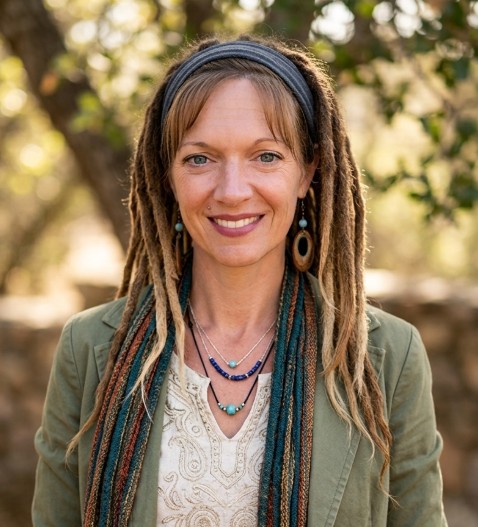 Angelina Michelle