

How to Use Shiya’s Herbal Compendium ✦
Welcome to Shiya’s Herbal Compendium, a living grimoire of green wisdom gathered for the Mystic Path. This guide is more than a list of plants — it is a doorway into relationship with the spirit of herbs and spices that surround us every day, from the kitchen shelf to the wild edges of the field.
Each entry is written in the same flowing format: a poetic introduction to the herb’s presence, followed by its physical description, magical correspondences, culinary and everyday uses, ritual applications, folklore, safety notes, and a closing reflection. At the end of each, you’ll always find a gentle reminder to consult your doctor before ingesting any unfamiliar plant. Safety is sacred too.
The herbs are organized by their most common names in alphabetical order (A–Z), so you can easily browse or search by what you’re most likely to call them. Within each folder, you’ll find the post for that herb along with any added reflections or discussions from our community.
Think of this compendium as a woven tapestry: equal parts spellbook, kitchen guide, and herbal companion. Some entries will be short and practical, others long and lore-rich, but all are designed to invite you into relationship.
At the bottom of this post you’ll find a discussion link where you can request herbal references, ask questions, or share your own experiences. The more voices woven into this compendium, the more alive it becomes.
Step gently, read deeply, and let the herbs reveal their mysteries to you in their own time.
Shiya’s Herbal Compendium is a living guide — a grimoire that grows as we do. It unlocks for members at Level 2, so once you’ve reached that stage you’ll be able to explore the full A–Z collection of herbs and spices, each organized by their most common names. This thread is the place where you can:
- Request specific herbs or spices you’d like to see added.
- Share your own stories, folklore, or ways you’ve worked with a plant.
- Ask questions about correspondences, magical uses, or safe preparations.
Every voice here adds to the richness of the Compendium. If an herb has touched your life — whether in the kitchen, the garden, or your spell work — you’re invited to speak of it here. Let’s weave this tapestry of green wisdom together. Reminder: The entries in this Compendium are for spiritual and educational purposes. Always consult a qualified healthcare provider before ingesting any unfamiliar herb or substance.
Arnica
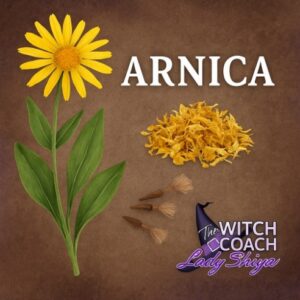
Common Names Arnica, Mountain Daisy, Leopard’s Bane, Wolf’s Bane (not to be confused with Aconite) Scientific name: Arnica montana
Bright yellow blossoms, like miniature suns, crown the mountainsides where Arnica grows. This flower has long been gathered as a healer of bruises, sprains, and wounds, carrying the fiery light of resilience into battered flesh. Its spirit is both fierce and tender, offering strength in times of hurt.
Physical Properties & Description Arnica is a perennial herb with bright yellow daisy-like flowers, native to the mountainous regions of Europe and North America. It grows on grassy hillsides and alpine meadows. The dried flowers and roots are traditionally used in tinctures, salves, and ointments.
Magical Correspondences Element: Fire Planet: Sun Energy/Theme: Healing, protection, courage, strength Symbolism: Inner vitality, solar energy, restoration after injury
Culinary & Everyday Uses Arnica is not a culinary herb. It is used only externally in herbalism — most often in oils, ointments, salves, or compresses for bruises, muscle aches, sprains, and inflammation.
Ritual & Spell craft Applications
- Carry dried flowers in a sachet for courage and strength during challenges
- Place on the altar as a solar offering for vitality and renewal
- Use in protective charms to guard against accidents and misfortune
- Burn in small ritual fires (with care) to call in solar energy for healing
Lore & Cultural Stories In European folk tradition, Arnica was believed to carry the sun’s energy and was sometimes placed in fields to encourage strong crops. Its name is thought to derive from the Greek arnakis, meaning lamb’s skin, for its soft hairy leaves.
Toxicity & Safety Notes Arnica is toxic if ingested and should never be taken internally. Even topical use should be diluted and applied carefully, as strong preparations can irritate the skin. Safe primarily as a diluted salve, oil, or ointment for external use only.
Arnica shines like the sun upon the wounded, offering strength and renewal. It teaches that healing may be fiery, awakening the body to repair itself, and that even in times of hurt, the light of resilience remains.
Legal Disclaimer This information is offered for educational and spiritual purposes only. Always consult with a qualified healthcare provider before ingesting any unfamiliar herb or substance, especially if you are pregnant, nursing, taking medications, or have underlying health conditions.
Angelica
Common Names
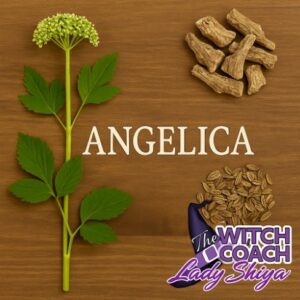
Angelica, Wild Celery, Holy Ghost Root, Archangel Root
Scientific name: Angelica archangelica
Angelica rises tall and noble, a plant often linked with archangels in lore. Its sweet, musky fragrance and towering umbels of pale green flowers lend it an aura of protection and sanctity. Long used as both food and medicine, Angelica is considered a guardian herb — one that brings courage, wards off harm, and uplifts the spirit. It stands as a bridge between the earthly and the divine, said to bloom where angelic presence is near.
Physical Properties & Description
Angelica is a biennial or short-lived perennial in the carrot family, reaching heights of 4 to 6 feet. Its large, divided leaves spread wide from hollow stems, and in its second year it produces globe-like umbels of yellowish-green flowers. Its thick root and seeds are strongly aromatic, carrying a sweet yet musky scent.
Magical Correspondences
Element: Fire and Air
Planet: Sun and Venus
Energy/Theme: Protection, courage, exorcism, healing
Symbolism: The archangel’s staff — a guardian’s blessing, light in shadow
Culinary & Everyday Uses
Candied stems used in confections and baking, especially in Europe
Seeds and roots used to flavor liqueurs such as Chartreuse and Benedictine
Root decoctions historically taken for digestive health and respiratory complaints
Leaves occasionally used in teas or tonics
Ritual & spell craft Applications
Root carried as a powerful protective charm against curses and evil spirits
Burned or sprinkled in the home to cleanse and consecrate
Incorporated into healing rituals, especially for emotional resilience and courage
Used in exorcism rites to banish malign forces and invoke divine guardianship
Lore & Cultural Stories
According to legend, Angelica was revealed by the Archangel Raphael during a plague as a gift to ward off sickness. Its association with angels made it a sacred plant across Europe, used in charms, blessings, and rites of protection. In folk traditions, children wore Angelica necklaces for safety, and its hollow stems were sometimes fashioned into protective flutes.
Toxicity & Safety Notes
Generally safe in small amounts, but can cause photosensitivity (skin reacting to sunlight). Not recommended in large doses or during pregnancy due to possible uterine stimulation.
Angelica is a herb of guardianship and light — a plant that stands tall, connecting heaven and earth, offering courage, protection, and healing to those who walk with it.
Legal Disclaimer
This information is offered for educational and spiritual purposes only. Always consult with a qualified healthcare provider before ingesting any unfamiliar herb or substance, especially if you are pregnant, nursing, taking medications, or have underlying health conditions. strategies to stay ahead of the curve and meet the evolving needs of our readers.

 CJ Emery
  Doreen Scanlan
  Tom T. Moore