Have you ever heard a song that instantly changed your mood, brought back a powerful memory, or made you feel peaceful? Sound has a remarkable ability to affect us emotionally, mentally, and physically. From chanting and drums to singing bowls and gongs, cultures around the world have used sound for thousands of years as part of spiritual, meditative, and healing practices.
Today, these practices are often referred to as sound healing, sound therapy, or sound bathing. While modern sound healing includes a variety of approaches, the basic idea is simple: intentionally experienced sound and vibration can encourage relaxation, mindfulness, emotional balance, and a sense of well-being.
What Is Sound Healing?
Sound healing is a non-invasive practice using sustained tones, vibrations, vocal sounds, chanting, and musical instruments. Rather than focusing on traditional songs with lyrics and a beat, sound healing often emphasizes resonant tones and vibrations.
A session might include crystal or metal singing bowls, Tibetan bowls, gongs, chimes, tuning forks, drums, bells, flutes, rain sticks, or the human voice.
One popular form is a sound bath. Participants generally lie comfortably on a mat or blanket while a practitioner creates an immersive environment of sound. The participant simply listens and allows the sounds and vibrations to become the focus of attention.
Sound baths may be offered in groups or individually. Some practitioners also incorporate guided meditation, visualization, breathing exercises, or spiritual practices.
Why Does Sound Affect Us?
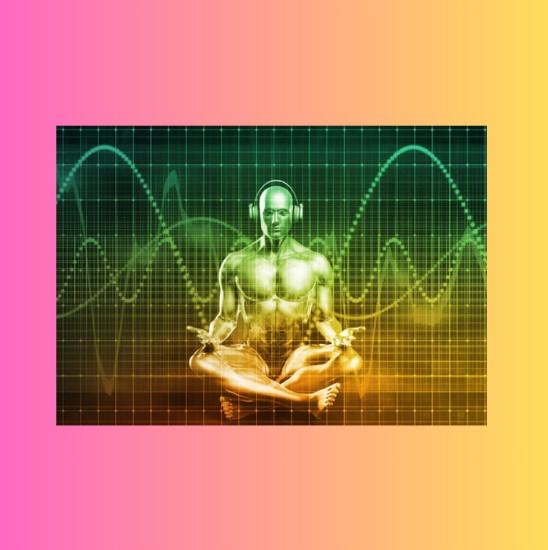
At its most basic level, sound is vibration. When an object vibrates, it produces waves that travel through a medium such as air. Those waves reach our ears and are converted into electrical signals that the brain interprets as sound.
Because sound provides a physical point of focus, it can also be useful during meditation. Instead of trying to stop thoughts, a person can concentrate on the tone of a singing bowl, the resonance of a gong, the rhythm of a drum, or the sound of their own breathing.
This type of focused listening may help quiet mental chatter and encourage a relaxed, meditative state.
Sound and Relaxation
One of the most commonly explored benefits of sound practices is relaxation. Chanting, humming, immersive listening, and rhythmic breathing can provide a way to slow down and become more present.
Research involving singing-bowl meditation has reported physiological and psychological responses associated with relaxation, including changes related to tension, mood, anxiety, and perceived well-being. Some studies have also reported effects involving heart and respiratory rates.
For someone living with a busy schedule, a sound session can provide an opportunity to step away from everyday distractions and simply listen.
Sound, Brainwaves, and Binaural Beats
Another concept frequently associated with sound practices is brainwave entrainment—the idea that rhythmic external sounds may influence patterns of brain activity.
Different brainwave states are commonly associated with different experiences. Delta is associated with deep sleep, theta with meditation and deeply relaxed states, alpha with relaxation, and beta with alertness and concentration.
Binaural beats use two slightly different frequencies presented separately to each ear. The listener perceives a rhythmic beat created by the difference between the two tones.
Binaural beats and other sound-based recordings are often used for meditation, relaxation, sleep, focus, and other wellness purposes.
However, claims about individual frequencies producing precise medical effects require caution. Although sound can clearly influence our experience, scientific evidence does not establish that specific frequencies have the exact healing properties sometimes attributed to them.
The Solfeggio Frequencies and Chakras
Sound healing traditions frequently connect particular frequencies with the seven major chakras. These frequencies are commonly referred to as the Solfeggio frequencies.
The traditional associations include:
- 396 Hz — Root Chakra: grounding, safety, and releasing fear and guilt
- 417 Hz — Sacral Chakra: creativity, pleasure, and change
- 528 Hz — Solar Plexus Chakra: transformation, confidence, and clarity
- 639 Hz — Heart Chakra: compassion, relationships, forgiveness, and connection
- 741 Hz — Throat Chakra: communication and authentic self-expression
- 852 Hz — Third Eye Chakra: intuition, insight, and spiritual awareness
- 963 Hz — Crown Chakra: higher consciousness, spirituality, and unity
These associations are part of modern sound-healing and spiritual traditions. They should be understood as traditional or metaphysical interpretations rather than established medical treatments. Scientific support for assigning specific healing properties to exact frequencies is limited.
The Power of Chanting and Mantras
Sound healing does not always require an instrument. The human voice itself can become a powerful instrument through chanting, toning, and mantras.
In chakra traditions, each energy center is associated with a bija, or seed, mantra:
Root — Lam
Sacral — Vam
Solar Plexus — Ram
Heart — Yam
Throat — Ham
Third Eye — OM
Crown — OM, although the crown is traditionally considered beyond sound.
Chanting can provide a rhythmic focal point for meditation while the physical vibration of the voice encourages awareness of the body.
Sound as an Ancient Spiritual Practice
The use of sound for spiritual and healing purposes is not a new idea. Ancient Egyptian practices included musical incantations, while the Samaveda, an ancient Indian text, contains chants and hymns. Greek physicians were also described as using musical instruments in connection with health and emotional well-being.
Across many traditions, chanting, prayer, sacred music, drums, bells, and other sounds have been used to create a sense of connection, focus, ceremony, and spiritual awareness.
Modern sound healing continues this long tradition while incorporating contemporary instruments and approaches.
What Happens During a Sound Bath?
A sound bath can be remarkably simple.
You lie down in a comfortable position, perhaps using a blanket, pillow, or cushion. The practitioner begins creating sounds with singing bowls, gongs, chimes, tuning forks, drums, or other instruments.
There is nothing you need to accomplish. You simply listen.
Some people focus on their breathing. Others visualize, meditate, or set an intention for the experience. The sounds become an anchor for awareness, allowing the mind to move away from everyday concerns.
When the session ends, participants are often given time to sit quietly and integrate the experience.
Listening in a Noisy World
We live in a world surrounded by sound. Music, conversations, traffic, machinery, alarms, phones, computers, and countless other noises compete for our attention.
Intentional listening offers another possibility.
Pause for a moment and listen. What do you hear? Perhaps it is the hum of an appliance, birds outside your window, wind moving through the trees, a clock, or your own breathing.
Instead of trying to change the sound, simply notice it.
This simple practice can transform ordinary listening into meditation.
The Healing Power of Sound
Whether you approach sound healing through meditation, spirituality, energy work, or relaxation, sound invites us to become more conscious of vibration and our response to it.
A song can lift our spirits. A drum can energize us. A chant can focus the mind. A gong can create a feeling of expansiveness. A singing bowl can become a doorway into stillness.
The scientific evidence is strongest for sound’s ability to influence relaxation, mood, attention, and the experience of stress. Spiritual traditions offer additional interpretations involving chakras, subtle energy, consciousness, and sacred frequencies.
Perhaps the most accessible part of sound healing is also the simplest:
Stop. Listen. Breathe. Become present.
In a world filled with noise, learning to listen intentionally may be one of the most valuable forms of self-care we can give ourselves.
Take some me time and listen to the video.
Listen To The Video

 Dr. Judith Orloff
 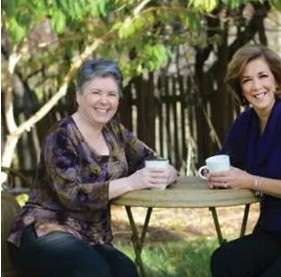 Connie Wake and Susan Fiandach
 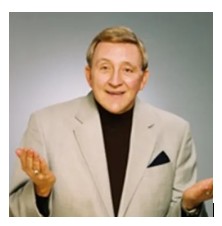 Tom T. Moore