
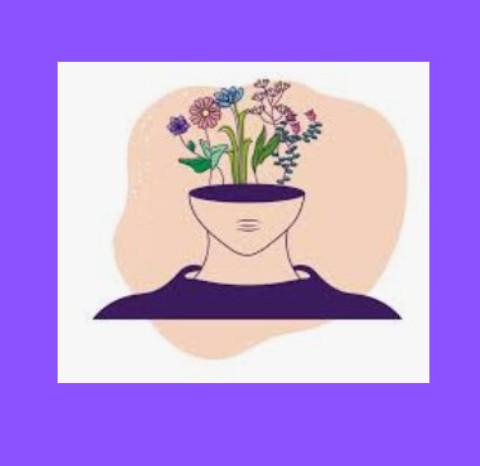
Key Lesson: Nothing is as thought sees it, let alone that it says “I” to… which is why we must work to be watchful of our thinking whose stream creates the illusion of a single self, but that is – in truth – many.
For Further Study
When you think of a single beautiful flower in springtime – while it may stand with petals and leaves that look a certain way – you’ll never find a single flower the same as any other flower. Can you understand that the life of that flower is not the life alone that you see coming out of the ground? That flower belongs to a much greater life than the individual expression that you say is beautiful. So that when you speak of the beauty of a single flower, you could never utter the words or experience the radiance of it were it not for the fact that the life of that flower itself belonged to a body, a universe of life – the creation out of which that one flower came.
But we don’t see the bigger life behind the little one. All these little things that we look at in life – be it a flower, a lion, or a river – we don’t understand that what we’re looking at is just an individuated expression of something far greater than the thing we observe. We only see the little life, which incidentally is why people fear death, because they only see the little life. They know nothing of the bigger life from out of which their little life has come.
In exactly the same way, so does it hold true for what we think of as being “I ” – what we call our sense of self. Our feeling of “I” belongs to a tiny world. And because we don’t know the Real I, the Divine, the Christ, and all we know is what that little “I” in us presents itself as being, we don’t know to whom we belong.
Said otherwise, we belong to anyone and everything we look at or think about that provides us with a sense of identity. What kind of life is it when the dominant “I” inside of you does nothing but look in the mirror of the past? And all it does is tell you that you’re this, you’re that, you can’t, you won’t, and look what’s happened? And so, because you do not know to whom you belong, you belong to anything that comes along and claims you with the authority of some pain, talking to you about yourself. Because you don’t know to whom you belong, you would rather listen to something telling you who you are than to authentically find for yourself this larger life you belong to that never talks to itself, let alone denigrates itself.
Most of us have absolutely no awareness of I at all. And yet there is no more valuable possession in this life than our sense of I. Everything that is good, beautiful, true and noble, and everything that is turned into food to produce beauty, love and nobility, is in our sense of I. We meet life through our sense of I. But our sense of I is not meant to be dominated by what it meets in life. Rather, it is meant to be reflected in the life it meets, and to know itself through the broader existence that relationship produces.
Presently, our identity is a process of constant comparison of one thought bringing up another thought, then reflecting upon what it brings up, and in the reflection, producing stimulation. And in the stimulation, a “for” or “against” appears. Now we know what to do about what has stimulated us, and we feel alive. But we are not alive when our thoughts are telling us who we are based on some comparison, based on what has happened in the past – all the “I’s,” the parts of us that talk about our past, our problems, our fears, our worries, what we hate.
How do you recognize a little “I”? Because would you deliver yourself into that captivity if you knew the only reason you feel as though you are in pain is because something in you is looking at a life that you don’t have? And you couldn’t feel you’re missing it if it weren’t for the fact that something in you says you ought to have it.
All these things inside of a person that produce constant conflict are part of the process of little “I” and more little “I’s.” Any time you’re resenting something or someone, any time you’re talking to yourself about what just went wrong, you are in the hands of a little “I.” Little “I’s” pretend to know. Strong opinions come from little “I’s.” Anxiety is always the expression of a little “I.” For that matter, all negative states belong to little “I.” Why? Because you can’t get negative without resisting something. Resistance comes from a body inside of a human being’s psychological body that’s dead.
When you are angry, worried, frightened, concerned about your appearance, going over the past, taking a selfie in one form or another, self-referencing, it is another attribute of a little “I.” “Me, me, me, me, me” – everything is about me. There is maybe no better definition of a little “I” than the part of you that makes something big out of everything. Because the little “I” thrives on ruining your potential to know Real I, and then everything feeds little “I.” And it doesn’t care what it eats because it’s not alive. It just wants the constant stimulation of “Poor me,” “This isn’t right,” “What am I going to do?” “This is wrong.” You just give yourself over to all those conditions that come into you.
This I that we can be aware of while we’re aware of “me” is life. It is where Love lives. Love lives in Real I. It’s difficult, because we have so little attention and capacity to actually keep our mind sharp enough to see it. Because the minute you see it, the minute thought starts, I disappears. Then little “I” is what trails thought, picking up the pieces, putting it together, pushing it forward. Little “I” is always examining the trail of thoughts and deriving a sense of self from them. Whereas Real I, who you really are, to whom you actually belong, is present enough to see the trail of thoughts – just like you would see a contrail from a jet pass through the sky.
The little “I” always asks for the best of everything. And how do you know it’s a little “I”? Because when it doesn’t get what it wants, it’s humiliated, angry, or frustrated. Real I, your true nature, does not go through those gyrations. Why? Because it lives from another order of yourself. The whole purpose of spiritual teachings is the gradual movement from being identified with one little “I” after another, into the recognition and through the realization that each of these little “I’s,” all they’re doing is borrowing your life. Do you want to loan out your life until the time comes when your life itself is called for, and then you find you have nothing?
Little “I’s” love to compare your life to something else. Little “I’s” can’t use anything that’s living, because they’re not alive. What lives is in relationship with life itself. And when you’re in relationship with life itself, then what is true in you – the gifts that you are given as a creation of a broader life – the individual expression of your life is seeded with every possibility that you need in order to enter into the broader life, which is ultimately the gift of this existence.
There are multiple exercises implied in this new understanding. First, if when you’re suffering, you could just see in that moment that the only reason the condition persists as it does is because something in you insists that it does. Then you would know what to stop loaning yourself to. Why would anything in you continually refresh in your mind a relationship in which, through it, you’re miserable every time it’s reflected? Why would you do that? Would you do that if you had the choice?
Catch the little “I’s.” Don’t make a big deal out of it. Just notice these dead parts, these “I’s” – how insistent they are. Little “I’s” always come with pressure. When you’re depressed, a pressurized little “I” is forwarding, over and over again, what it wants you to see (that it is projecting) so that you can feel the pain and it can live and gain from your existence. Little “I’s” are pressurized. Find in your own life these examples of little “I’s,” and don’t feed them. The way you’ll know it’s a little “I” is because no little “I” is going to say, “Hey, I’m a little “I!” How do you know it’s a little “I”? Because it feels like a big “I.” And the bigger the “I” feels, the smaller it is. Here is more evidence: Little “I’s” love to pounce. Little “I’s” love to blame. Now if I know that I’m in the hands of a little “I,” that I’ve loaned out my life – but it’s my life – am I not entitled to ask for a return? Demand your life back! Don’t give your life away to little “I’s.”
Find out for yourself in your day-to-day life. It happens almost incessantly, where some little “I’s” come up and borrow from you your true sense of I. The clearer you can become in these moments, the sooner they will begin to dissipate. And you’ll know what it means to be a human being whose natural nature is to be in command of their own life because their natural nature belongs to the Grand Nature, to the Divine that is giving them their life instead of stealing it for the sensation of being alive. One is enriched, the other made poor. You choose.
Do the work. Make something of what you’ve been given. You grow what you’re given by dying to little “I,” the seed in the ground that must pass and abide alone lest something else grow from it. You have to die to live. Die to what? All these little “I’s,” and of course, the nature from out of which all little “I’s” come. Because just as there is one source of big I, there’s one source of little “I” in the scale of things. And to understand that is the beginning of wanting to be present enough in your life to understand: “I need to be attentive here. Why would I let something that’s dead have my life?” The more awake you are, the more alive you become. The more alive you become, the more you’re given the life that you want. It’s perfect.

 PJ Perkins
  Colleen Irwin