

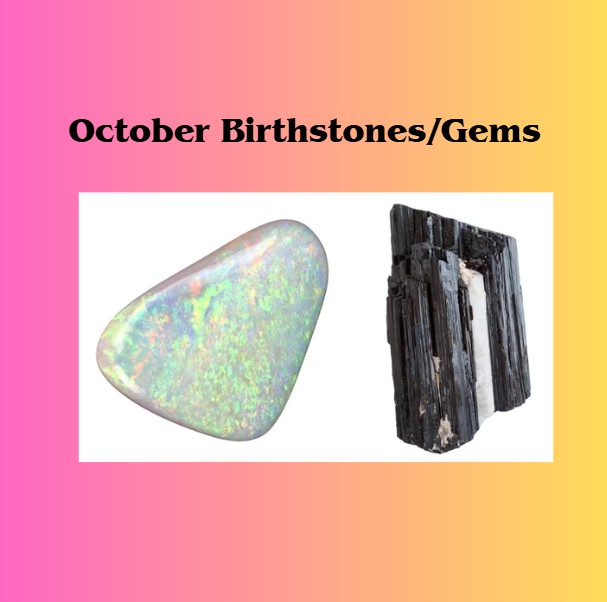
Explore October’s colorful birthstones, their fascinating histories, and the spiritual meanings associated with these remarkable gifts from the Earth.
October is a month of transition. Autumn brings brilliant colors, cooler days, and an invitation to slow down, reflect, and prepare for the quieter season ahead. In the world of crystals and minerals, October is especially fascinating because it is associated with two celebrated birthstones: opal and tourmaline. Both are known for their extraordinary colors and are cherished not only as beautiful gemstones but also for their traditional metaphysical associations with creativity, emotional balance, protection, and transformation.
Beyond these two birthstones, several other crystals are commonly connected with October’s seasonal themes, offering inspiration for anyone interested in working with stones as part of a spiritual or meditative practice.
Opal: The Stone of Changing Light
Opal has been treasured for centuries and is often called the “Queen of Gems.” Unlike most gemstones, precious opal can display a shifting play of color as light moves across its surface. Brilliant flashes of green, blue, pink, orange, and red seem to dance within the stone, making every specimen unique.
Opal is a hydrated form of silica and is classified as a mineraloid rather than a true mineral because it lacks a fully ordered crystal structure. Its spectacular colors arise from the way microscopic silica structures interact with light. Common opal does not display this distinctive play of color, while precious opal does.
Historically, opal has been associated with hope, love, good fortune, and protection. Ancient Greeks connected it with prophecy, while Roman traditions associated it with love and hope. Its changing colors have also inspired symbolic connections with imagination, spontaneity, and the many dimensions of human experience.
In metaphysical traditions, opal is often described as an emotional mirror. It is believed to amplify feelings and bring buried emotions into awareness, encouraging reflection and self-understanding. Some practitioners associate it with creativity, intuition, and spiritual awakening. Because of its connection with changing light, opal can serve as a reminder that our inner lives are constantly moving and evolving.
One way to work with opal is to hold it during meditation while reflecting on a creative project, an emotional experience, or an area of life ready for renewal. Its traditional symbolism makes it a fitting companion for October, when nature itself is displaying the beauty of change.
Tourmaline: A Rainbow of Possibilities
Tourmaline is October’s modern birthstone and one of the most colorful gemstone groups in the mineral world. Its name is commonly traced to the Sinhalese term turmali, associated with mixed colors. Tourmaline occurs in a remarkable range of hues, including black, green, pink, red, blue, and even multicolored combinations within a single crystal.
The stone’s history includes its arrival in Europe through trade with Sri Lanka during the late seventeenth and eighteenth centuries. Tourmaline also attracted the attention of scientists because certain specimens can develop electrical charges when heated or cooled, a property known as pyroelectricity.
In crystal traditions, the meaning of tourmaline is often connected to its color.
Black tourmaline is widely associated with grounding and protection. It is commonly used in spiritual practices as a symbolic shield against unwanted energy and as a reminder to remain centered during stressful or uncertain periods.
Pink tourmaline is connected with the heart chakra and traditionally represents love, compassion, tenderness, and emotional healing. It may be chosen during meditation focused on self-acceptance, forgiveness, or relationships.
Green tourmaline, sometimes called verdelite, is associated with vitality, renewal, abundance, and heart-centered growth. Its rich green color evokes the natural world and the continuing cycles of life.
Watermelon tourmaline, with its pink and green coloring, combines the traditional symbolism of the heart with themes of balance, love, and emotional renewal.
Tourmaline’s diversity makes it especially appealing for personal spiritual work. A person seeking grounding may be drawn to black tourmaline, while someone exploring compassion or emotional openness may prefer pink or green varieties.
Other Stones for October
Opal and tourmaline are not the only stones associated with October. Several other gems and minerals are traditionally connected with the month, its autumn atmosphere, or its themes of reflection and transformation.
Rose quartz is associated with unconditional love, compassion, and forgiveness. Its gentle pink color makes it a popular stone for meditations centered on self-love and nurturing relationships.
Labradorite is sometimes called the Stone of Magic because of its brilliant flashes of blue, green, and gold. In metaphysical traditions, it is linked with intuition, spiritual exploration, and transformation. Its shifting colors echo October’s changing landscape.
Smoky quartz is traditionally associated with grounding, stability, and releasing emotional heaviness. It can be used as a symbolic reminder to stay present while moving through life transitions.
Carnelian is connected with courage, motivation, creativity, and personal power. Its warm orange and reddish tones complement autumn’s colors and make it a fitting stone for renewed enthusiasm.
Moonstone is associated with cycles, intuition, and new beginnings. Its symbolism can be especially meaningful during a season that encourages reflection and preparation for change.
Jasper, which occurs in many varieties, has long been valued for its earthy colors and patterns. In crystal traditions, it is often called a nurturing stone and associated with endurance, stability, and protection.
Working with October’s Crystals
Crystals can become meaningful companions in a personal spiritual practice, whether they are worn as jewelry, placed in a meditation space, or held during quiet reflection. October’s stones offer a variety of symbolic themes to explore.
For a simple practice, choose a stone that appeals to you and take a few moments to notice its color, texture, and natural patterns. Consider what those qualities bring to mind. You might use opal to reflect on creativity, pink tourmaline to focus on compassion, or smoky quartz as a reminder to feel grounded during change.
Some crystal traditions also associate gemstones with the chakras. Pink and green tourmaline are commonly linked with the heart chakra, while black tourmaline is associated with the root chakra. Opal’s shifting colors have led some practitioners to connect it with several chakras rather than just one. These associations are spiritual traditions, not established medical effects, and can be approached as tools for personal reflection.
Celebrating the Beauty of Change
October’s gems and minerals offer more than a beautiful display of color. They provide a language of symbolism through which we can explore the changing seasons of our own lives. Opal reminds us of creativity, emotional awareness, and the many colors of experience. Tourmaline offers a spectrum of meanings, from grounding and protection to compassion and renewal. Other autumn-associated stones invite us to reflect on courage, balance, and new beginnings.
As the natural world transforms around us, these stones can serve as small reminders to welcome change, remain connected to ourselves, and find beauty in each stage of the journey. Whether you are drawn to their geology, their history, or their metaphysical meanings, October’s crystals invite us to appreciate the extraordinary artistry of the Earth.

 Dr. Judith Orloff
  Connie Wake and Susan Fiandach
  Tom T. Moore