
There are certain figures in spiritual history whose influence seems to grow rather than fade with time. Edgar Cayce is one of them. Known as the “Sleeping Prophet,” Cayce became one of the most documented psychics of the twentieth century, giving thousands of readings while in a self-induced trance state. His work moved far beyond the medical questions that first brought him attention, eventually exploring reincarnation, dreams, karma, meditation, the afterlife, ancient civilizations, psychic abilities, and humanity’s spiritual purpose.
What makes Cayce particularly fascinating is the contrast between the man and the extraordinary material that came through his readings. He was not a flamboyant mystic living outside society. He was a deeply religious Christian, a Sunday school teacher, a husband and father, and a man who struggled for much of his life to understand the unusual abilities he believed he had been given. His story is one of spirituality, service, uncertainty, and an ongoing search to understand where his information came from.
A Gift That Appeared in Childhood
Edgar Cayce was born in Kentucky in 1877 and grew up in a Christian household. According to accounts of his life, unusual experiences began during childhood. He described seeing and communicating with spiritual beings and later recalled an encounter with an angelic presence after praying for the ability to help other people. He also developed an extraordinary ability to remember information, reportedly discovering that he could retain the contents of books after sleeping on them.
His spiritual life was deeply rooted in Christianity. Cayce committed himself to reading the Bible throughout his life and taught Sunday school for many years. Even as his psychic abilities became more prominent, he continued to wrestle with how those abilities fit within his Christian beliefs. Rather than abandoning his faith, he attempted to understand the unusual information coming through him within a spiritual framework that remained centered on service and helping others.
That desire to help others appears to have been central to Cayce’s understanding of his gift. His readings were not simply about predicting the future. Much of his earliest work involved people seeking answers about illness and health.
The Sleeping Prophet
Cayce discovered that he could enter a deeply relaxed, sleep-like state by lying down, closing his eyes, and placing his hands across his stomach. While in this state, he would respond to questions presented to him. These sessions eventually became known as his readings.
His early reputation developed primarily through medical clairvoyance. One important turning point came when Cayce himself lost his voice for approximately a year. During a trance induced by hypnotist Al Layne, he reportedly diagnosed his own condition and recommended a treatment. His voice returned, and the experience helped establish the unusual method that would define much of his life.
Eventually, people began seeking Cayce’s help from across the country. He could reportedly be given a person’s name and location and then enter his trance state to provide information about that individual’s condition. By the end of his life, more than 14,000 documented readings had been preserved, many recorded by his longtime secretary, Gladys Davis. The surviving archive represents one of the largest collections of documented psychic material associated with a single individual.
The Association for Research and Enlightenment now describes the readings as covering more than 10,000 topics, ranging from holistic health and dreams to reincarnation, intuition, meditation, ancient mysteries, and spiritual growth.
From Healing to the Mysteries of the Soul
Although health remained at the center of Cayce’s work, the questions brought to him gradually became much larger.
People wanted to know about their dreams, their relationships, their life purpose, their spiritual development, and experiences they believed might have occurred before their current lifetime. Cayce’s readings began addressing reincarnation, karma, astrology, psychic phenomena, meditation, prayer, ancient civilizations, and the nature of the soul.
This expansion marked an important transition in Cayce’s life. He was no longer simply viewed as a medical clairvoyant. He was becoming a spiritual teacher whose work attempted to connect the physical, mental, and spiritual dimensions of human existence.
One of the ideas that became especially important was reincarnation. Cayce’s readings described the soul as continuing through multiple earthly experiences, with each lifetime offering opportunities for growth, learning, and the balancing of karma. The body, in this philosophy, was temporary; the soul continued its journey beyond a single incarnation.
For people interested in recurring lives and the possibility that our relationships extend beyond one lifetime, Cayce’s teachings remain particularly compelling.
Arthur Lammers and a New Direction
A major turning point occurred in 1923 when Cayce met Arthur Lammers, a publisher and student of Theosophy who was deeply interested in ancient religions, astrology, reincarnation, and esoteric philosophy. Lammers encouraged Cayce to use his abilities to explore questions that went far beyond physical health.
During their early readings together, Cayce began discussing reincarnation and the idea that a soul could experience multiple earthly incarnations. The readings explored karma, the purpose of human existence, ancient spiritual traditions, and the relationship between the soul and the physical body.
For Cayce, these ideas created a personal dilemma. He had been raised within a traditional Christian framework, and concepts such as reincarnation were unfamiliar and sometimes uncomfortable to him. Yet the information continued to emerge during his trance readings.
Rather than simply accepting everything unquestioningly, Cayce attempted to measure these teachings against the Christian values that had guided his life. This tension between traditional Christianity and metaphysical spirituality became one of the most interesting aspects of his philosophy.
The Akashic Records
Perhaps no concept associated with Cayce has captured the imagination of spiritual seekers more than the Akashic Records.
Cayce described the Akashic Records as a kind of universal repository containing the experiences of souls. He believed that information about an individual’s experiences could exist within the subconscious and within this larger spiritual record. In his view, a person who was properly attuned could potentially access this information.
This concept became an important part of later metaphysical thought. Cayce’s interpretation connected the idea of universal spiritual records with both mystical traditions and Christian concepts such as the “Book of Life.” His approach was characteristic of his broader philosophy: he continually looked for connections between different religious and spiritual traditions.
For today’s spiritual seekers, the Akashic Records remain a popular concept in meditation, intuitive work, past-life exploration, and spiritual counseling.
Atlantis, Ancient Egypt and Ancient Mysteries
Cayce’s readings also ventured into some of the most mysterious subjects imaginable. He spoke about Atlantis, ancient Egypt, early Christianity, the pyramids, astrology, and ancient spiritual traditions.
His readings about Atlantis became particularly famous. According to the material attributed to Cayce, Atlantis was an advanced civilization whose history involved spiritual development, technological advancement, conflict, and eventual destruction. Cayce also connected ancient civilizations with humanity’s continuing spiritual evolution.
Whether one regards these accounts as psychic information, spiritual mythology, or speculative history, they helped establish Cayce as an important figure in the development of modern metaphysical thought.
The Birth of A.R.E.
Cayce’s work eventually developed into an organization dedicated to preserving and studying the readings. In 1931, he and his supporters founded the Association for Research and Enlightenment (A.R.E.) in Virginia Beach, Virginia. Its purpose was to continue exploring the subjects that had emerged repeatedly throughout his readings, including spirituality, holistic health, intuition, dreams, psychic development, reincarnation, and ancient mysteries.
The organization continues today. The A.R.E. describes its mission as creating opportunities for personal change in body, mind, and spirit through the wisdom found in the Cayce material. Its Virginia Beach campus includes a metaphysical library, meditation spaces, educational programs, a health center, and other resources for people interested in Cayce’s work.
The preservation of the readings is perhaps one of Cayce’s greatest legacies. The Edgar Cayce Foundation maintains an extensive archive containing more than 14,000 surviving readings along with correspondence, photographs, research materials, and other historical records.
Thomas Sugrue and There Is a River
Another important person in Cayce’s story was journalist and writer Thomas Sugrue. Initially skeptical of psychic phenomena, Sugrue became acquainted with Cayce through Cayce’s son, Hugh Lynn, while attending Washington and Lee University.
Sugrue eventually became deeply interested in Cayce’s work and wrote There Is a River: The Story of Edgar Cayce. Published in 1942, the biography brought Cayce considerable national attention. Sugrue’s portrait presented Cayce not as an all-knowing mystic, but as an ordinary man attempting to understand and responsibly use an extraordinary ability.
That distinction is important. Cayce himself reportedly struggled with his fame and frequently worried about whether the information coming through him was genuinely divine, psychological, or something else. His response was to emphasize service, ethical living, and spiritual development.
A Philosophy of Healing
Cayce’s teachings were not limited to physical remedies. His larger philosophy emphasized the relationship between body, mind, and spirit.
The readings addressed meditation, prayer, diet, dreams, emotional patterns, personal responsibility, intuition, and spiritual growth. His approach suggested that health could not always be separated from the mental and spiritual dimensions of a person’s life.
The A.R.E. currently organizes the vast collection of readings into five broad areas: health-related information; philosophy and reincarnation; dreams and dream interpretation; ESP and psychic phenomena; and spiritual growth, meditation, and prayer.
Many of these ideas—which may seem familiar today—were far less common in mainstream American culture during Cayce’s lifetime.
The Reluctant Pioneer of the New Age
Cayce died in 1945, decades before terms such as holistic health, meditation, energy work, soul mates, and spiritual growth became part of mainstream culture. Yet many of the subjects found in his readings would later become central to the modern metaphysical movement.
His work helped popularize ideas about reincarnation, past lives, holistic approaches to wellness, dreams, intuition, meditation, and the spiritual purpose of life. Later generations of spiritual seekers encountered Cayce through books, lectures, study groups, and organizations devoted to his teachings.
The influence of Cayce’s ideas continued to expand after his death. Books about reincarnation and past-life experiences helped bring these concepts into popular culture during the 1950s and 1960s, while the growing interest in Eastern spirituality and alternative healing during the 1960s and 1970s created an environment in which Cayce’s work found a new generation of readers.
What Can We Learn From Edgar Cayce Today?
More than eighty years after his death, Edgar Cayce remains a fascinating and sometimes controversial figure. His psychic abilities and many of the claims contained in his readings remain matters of belief, interpretation, and debate. Yet even beyond the question of whether his readings were genuinely clairvoyant, his work raises enduring questions about consciousness and the human search for meaning.
What if consciousness extends beyond what we can ordinarily perceive? Could dreams contain information we don’t consciously understand? Could our lives be connected through recurring patterns or previous incarnations? Is there a deeper relationship between physical health, emotional well-being, and spiritual development?
Cayce encouraged people to explore such questions rather than simply accept someone else’s answers. His organization continues to describe his approach as experimental and open-minded, emphasizing the application of knowledge to the challenge of living a better life.
Perhaps that is the most lasting lesson of Edgar Cayce. He was not simply a man who entered a trance and delivered mysterious readings. He was a deeply spiritual person who spent his life trying to understand an extraordinary gift while remaining committed to helping others.
His legacy invites us to look beyond the obvious—to explore the relationship between body, mind, and spirit, to question what we think we know about consciousness, and to remain curious about the mysteries of existence.
For anyone interested in reincarnation, psychic abilities, dreams, holistic healing, meditation, or the possibility that our lives are part of a much larger spiritual journey, Edgar Cayce’s work offers an extraordinary place to begin exploring.
Learn more about the A.R.E that continues Cayce’s work: https://edgarcayce.org/resources/ https://edgarcayce.org/events/all-events-and-activities/

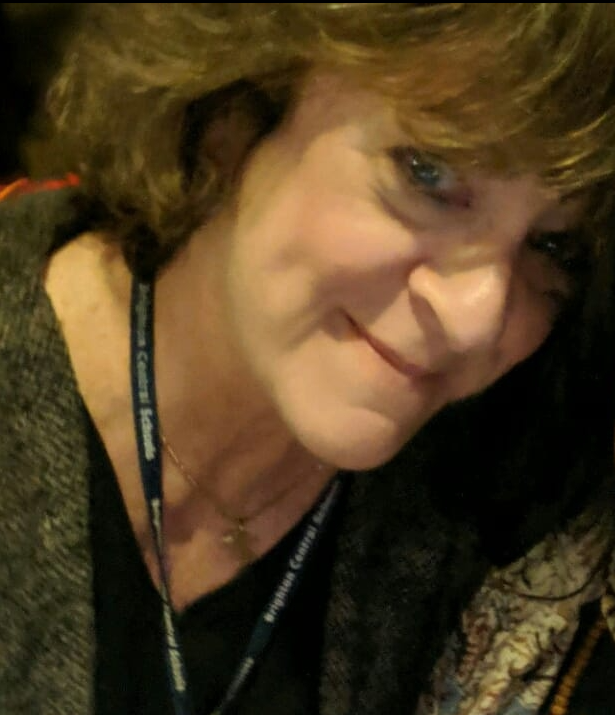
 Colleen Irwin
 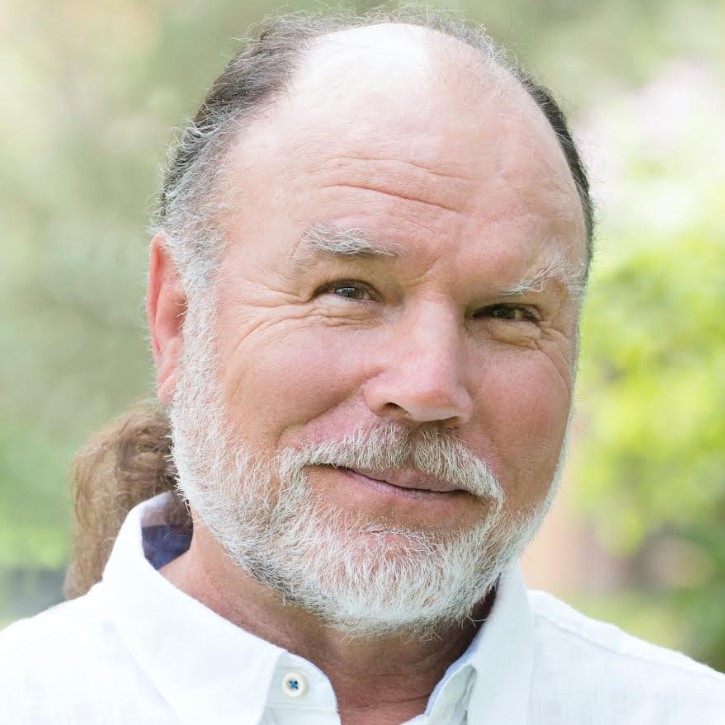 Guy Finley
 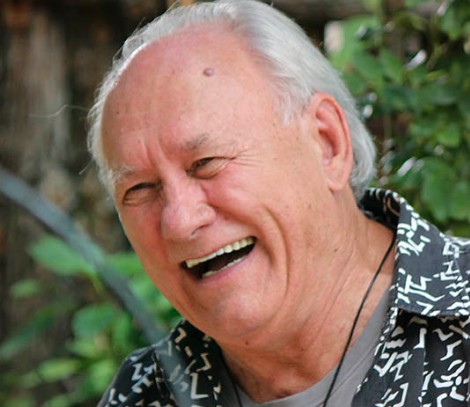 Ross Bishop